Sunday, November 24, 2013

Sanctuary: For Everyone

Often when one comes to a new country or area, there are differences. Language, Customs, Traditions - all have different personalities based on the many different backgrounds. These marginalized people are always pushed into a dark, dusty corner, and never given a chance to flourish.

This weekend, my mother let me accompany her to a small dinner with one of her former student's family. This family was recently new to America: they had been here for only three years. Their story is opposite of this norm. When they arrived, they came with two other families, both of which are back in their native country. They could not handle the dark corner. My mother's student, however, was allowed 'sanctuary' in her classroom and thrived. From not speaking a word of English, he has morphed into a baseball all-star and a double-advanced math whiz. His English problem? Gone.

Similarly, Giovanni in her piece, Sanctuary: For Harry Potter the Movie, unites marginalized people of all backgrounds and provides them with sanctuary. She makes everyone equal in her temple and makes them feel accepted, nurturing them with similar experiences. They become pillars of support. She tears down the walls of differences and shines the light of strength.

I am not saying that all someone needs is nurturing. One also needs the inner strength to accept who they have left behind them in order to metamorphose; they need the strength to push past the dirt of past stereotypes and break into the open, endless world.

Even though roots can come from many different places, types, and traditions; they still need the same care and acceptance as others. They "[live], like all of us" (Giovanni, line 37). The only thing that is different: the way we blossom into who we are.


Sunday, November 17, 2013

Evolution

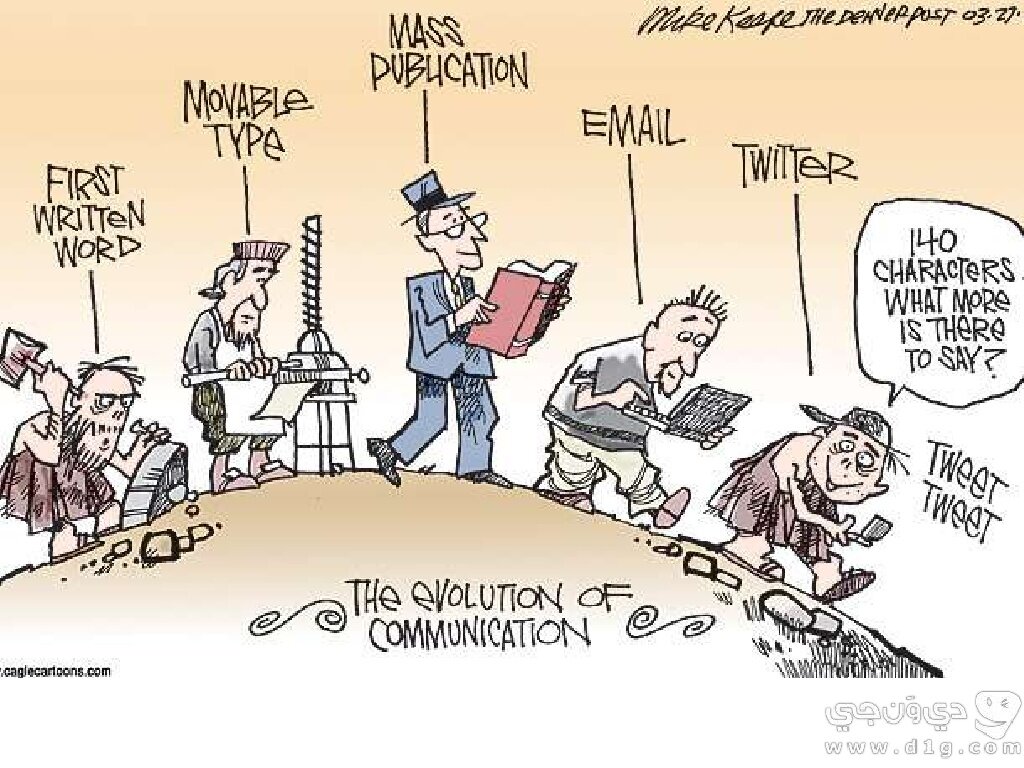
Although immeasurable time has passed since the foundation of punctuation was laid down, the catalyst time has changed its relevance. The era of strict adherence to punctuation, marked by extensive usage and structure, has been dimmed by the oncoming new age. Less punctuation usage does not decrease the level of understanding within a piece, but merely evolves a writer's meaning through conciseness. Due to this, even the ever-changing world should acknowledge a subtle change in these ironclad rules.

 Many would refute that today's world requires the archaic and strict conformity punctuation offers. Have we really changed that much from the historical way of writing? Scrutiny of historical writings makes it easy to see why. Yet, Hitchings examines the change from "long-established rules" to "a break from tradition" (Source A). Even the renegade literary heroes of old - Austen and Dickinson - exemplify the individual meanings each punctuation mark has and the connotations they hold (Source B/C). Lewis Thomas' Notes On Punctuation also reflect on the characters of each individual symbol of punctuation (Source D), and Dolnik reminisces about his past relationship with semicolons and how they connotate "a mere matter of style" (Source E). Cosco examines the usefulness Twitter has dealt with in regards of concise writing and audience refinement (Source F). Assuredly, the world has changed, and punctuation is not necessary to the extent it has had in the past. Changes have occurred: technology is new and ever-changing, and society has the option to not conform to the conventional rules of punctuation any longer. Yes, the times have changed.

Punctuation focuses more on the grammatical and orderly side of written language - without any regards to the true message or style embedded within. Yet it seems "consistent communication" is at a continual stand off with today's "language [that] evolves in conjunction with culture"(Source A). Twitter and other social media sites have character limits forcing writers to be concise. With these limits, writers have to pick and choose words, phrases, and even punctuation (Source F). However, tweets and posts still proclaim their messages even with little or no punctuation. Society has evolved to the use of hash tags, a new punctuation, in order to convey feelings and tones or essence. Even text messaging has created shorthand language. Today's ever-advancing technology creates the need for conciseness and, in turn, less punctuation. Like evolution, punctuation has to evolve gradually and embrace the sui genesis of an ever-changing world.

Sunday, November 10, 2013

Societal Expectations

Expectation. Expectation is an interesting word. A women’s acceptance is based not only on personal expectations but also on expectations of society. Women in particular, make an art of it in their behavior, their outlook, their sense of style and their overall presentation.

The question is, are these expectations necessary to be accepted by the opposite gender in society as equal, or as an aspect of competition of the same gender. 

Miley Cyrus is a prime example of this conflict. One wonders if her expectations were geared towards attaining male attention, or standing out as a woman. In either case, she left her mark on society. 

To some, such behavior is shocking; to others it could be nothing but a form of art. In any event, societal expectations were tampered with.  

In There Is No Unmarked Woman, by Deborah Tannen, there are expectations created by society for women such as the type of outer apparel – makeup and hairstyles – which are seldom used in evaluating males. Tannen details the various ways society has pressured females to bow towards societal expectations. For example, Tannen describes how women have many titles such as, ‘Mrs.’, ‘Ms.’, and ‘Miss,’ whereas men only have one: ‘Mr.’ Women mark themselves by applying different expectations of society in their outward persona.


Expectations dictate women’s lives and will continue to do so. Men can escape its clutches but women fall into deeply dug out historical crevices in which they are marked and scrutinized whether they like it, or not.

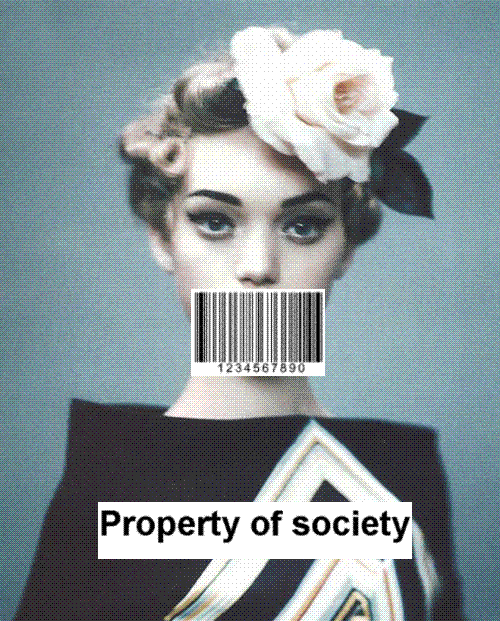
Unknown Artist - Property of Society
Came across this un Tumblr today and found it to be a thought provoking portait.
A pet peeve of mine is when tumblr users post image on their blogs with no mention of the artist or even the title of the image. With out this information us new viewers cannot shed any light on the purpose posed by the creation of the work, leaving us quite handicapped in our appreciation of the work.
Noel Noblett

Sunday, November 3, 2013

Visual Rhetoric in the Real World

Visual rhetoric is the language of images. It speaks for the images and converses with them, digging deeper into what exactly the image is trying to say.

This week we analyzed visual images associated with The Scarlet Letter.

We discussed how Dimmesdale was looking towards the light, how he was placed on the scaffold with Hester, how he held his heart, how he looked with fright. We analyzed the light and the darkness effect. We commented on how there was an A in the light of the heavens, and how it symbolized judgement from higher power - how Dimmesdale fears that judgement. We analyzed how the main color was scarlet, which represented the letter and its vividness.

Sad to say, I did not fully understand this concept. Until two days ago.

Gravity is a movie that follows the various measures taken to escape the writhing darkness of space. Without giving too much away, the story follows Sandra Bullock on her journey home to Earth. During the movie, one vivid scene stood out. I might have missed it, if I had not remembered the visual rhetoric. However, at a peaceful moment, I saw a picture that finally let me understand visual rhetoric. An image of a baby.


Her eyes are closed; she is floating peacefully; her arms are in fetal position; she is peaceful, maybe even sleeping. The light in the background indicates a peaceful tomorrow, where she will not be scared anymore. The only letters are Russian script, symbolizing a new beginning as the letters have the number one after them. She seems at stage one of her process. Her clothing is sparse and emphasizes her form, representing tightness as one would find in her mother's arms. This image symbolizes and conveys a message of safety and peace. She is out of danger in this one place. This capsule refers to the mother's womb where humans feel the safest. She is able to rest comfortably. The fetal position shows she is at her most vulnerable and needs the safety of a mothers' womb.

This image has let me understand how to interpret the language of images.

After the movie, a fellow classmate and I remarked about how we actually understood this. The movie was narrating a didactic story about being reborn.

Visual rhetoric helped me fully understand the underlying story under this one movie. Now I have to apply it to everything else I see and watch. Imagine the underlying stories of everything!